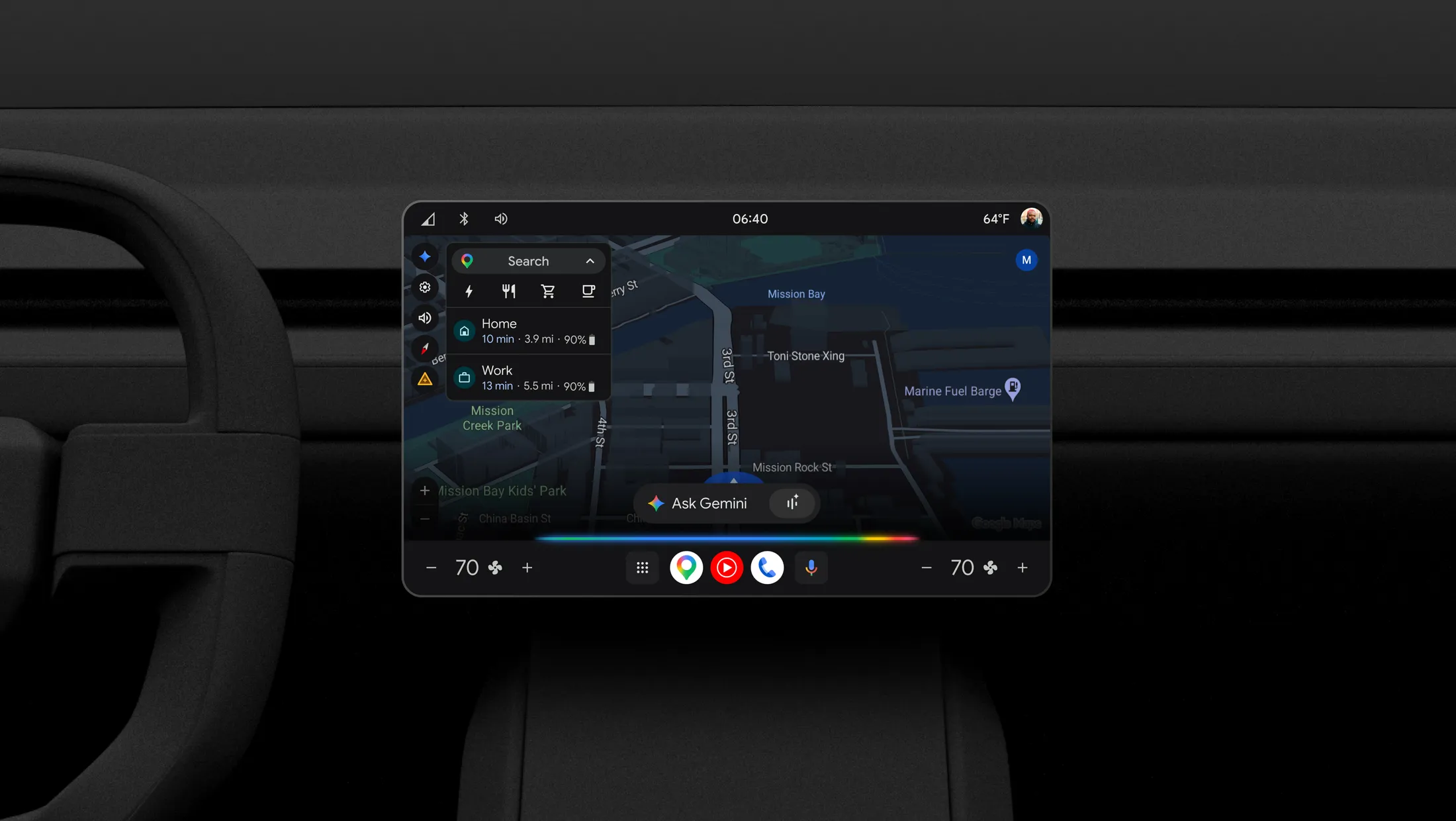
Google built-in is getting a major upgrade as Gemini starts rolling out to supported car dashboards. The update can bring more natural voice conversations, better trip planning, message help, music requests, EV charging support, and vehicle-specific answers to eligible cars that already run Google services through their built-in infotainment systems.¹
Why Google built-in Matters Right Now
For many drivers, Google built-in already means having Google Maps, Google Play, and Google Assistant available directly in the car. Unlike phone-projection systems, Google built-in runs Google apps and services through supported vehicles’ infotainment systems rather than relying only on a connected phone.²
Now, that experience is changing. Gemini is beginning to replace Google Assistant in eligible vehicles with Google built-in, though drivers can opt in and, in supported setups, switch back.¹
This matters because the car is becoming one of the next important places where people may use AI without opening a separate app. We are not just talking about asking a chatbot a question at a desk. We are talking about using voice inside the car while driving, planning a stop, replying to a message, checking route details, or figuring out how a vehicle feature works.
That makes the update more than another software addition. It shows how Google built-in is moving from basic voice commands toward a more flexible in-car assistant, with availability depending on the vehicle, region, language, data plan, and manufacturer support.⁴
What Google built-in Does in a Car
Google built-in is Google’s native software experience for supported vehicles. It brings Google apps and services into the car’s center display, including navigation, voice help, and access to apps through Google Play. Google’s support page says supported cars can use Gemini or Google Assistant, Google Maps, and Google Play directly in the vehicle.⁴
That deeper connection matters. Because Google built-in runs through the car’s own system, it can work more closely with the dashboard than a phone-only setup. Depending on the vehicle, drivers may be able to use voice commands for directions, audio, messages, and some vehicle settings.
Gemini builds on that foundation. Instead of requiring exact wording, it is designed to understand more natural requests. A driver could ask for a restaurant along the route with outdoor seating, then ask a follow-up question about parking or the menu.¹
That is the real change. The system is not just waiting for a short command. In supported cars, it can carry more of the conversation.
Key Gemini Features Coming to Google built-in
More Natural Help With Navigation
Navigation may be one of the clearest reasons this update will matter to everyday drivers. Google says Gemini can use Google Maps to help find restaurants, charging stations, and other stops along a route.¹
That means a driver does not always need to know the exact name of a business or speak in rigid commands. We could ask for a highly rated lunch spot near the route, a coffee shop before the next highway exit, or a charger close to a grocery store.
The follow-up ability is also important. A driver may be able to continue the same request instead of starting over. That could make Google built-in more useful during real trips, when plans change quickly and drivers need answers without tapping through menus.
Message Summaries and Replies
Gemini can also help with messages. Google says the system can assist with message summaries and replies, when the required phone and notification setup is enabled.¹
This could reduce the temptation to look down at a phone. Still, we should be clear about the limit. Voice tools can help reduce distractions, but they do not remove the need to pay attention. Drivers still need to decide when it is safe to respond, even hands-free.
Music Requests That Sound More Natural
Gemini also changes how drivers can ask for music or audio. Rather than naming an exact playlist, station, or song, drivers can describe what they want. General Motors says drivers will be able to ask for music that fits their mood, scenery, or trip length in supported vehicles with Google built-in.³
That may sound small, but it points to a broader shift. Google built-in is becoming less dependent on exact app commands and more able to understand intent. For drivers, that could make the car’s voice system feel less stiff.
Answers From the Owner’s Manual
One of the more useful parts of Gemini in Google built-in is vehicle-specific help. Google says Gemini can answer questions based on manufacturer-provided owner’s manuals, though availability and detail will vary by brand and model.¹
This could help with questions that many drivers normally avoid because manuals are long and dashboard menus can be hard to search. We might ask how to prepare the car for an automatic car wash, how to adjust the trunk opening height, or what a certain setting does.
For many owners, this could be one of the most valuable features. It turns the manual into something drivers can ask, rather than something they have to read page by page.
EV Charging and Battery Planning
For supported EVs, Gemini in Google built-in may help with battery and charging questions, such as finding chargers along a route or understanding trip-related range details.¹
That could be useful on longer drives. EV planning often involves route timing, charger availability, battery range, and stops. Keeping those questions inside the car’s voice system may make the process easier to manage while staying focused on the road.
What People May Be Missing About This Shift
The easy headline is that Gemini is coming to cars. The bigger story is that Google built-in is turning the dashboard into a more active software layer.
We are used to cars getting updates for maps, apps, and entertainment. This update goes further because Gemini can sit across several daily driving tasks at once: navigation, texts, music, charging, vehicle settings, and eventually other Google services. Google has pointed to future in-car access for services such as Gmail, Calendar, and Google Home, with safety limits.¹
That raises expectations. Once drivers get used to asking the car more natural questions, they may expect the system to understand context, remember the route, and connect details across apps.
It also raises pressure on automakers. Voice AI in a car cannot be confusing, slow, or distracting. It needs to work clearly, respect privacy, and avoid giving drivers too much to process at once.
Limits and Concerns to Watch
The update is promising, but it will not reach every driver at the same time.
Google says Gemini is rolling out first to English-language users in the United States, with more availability expected over time.¹ Access will also depend on the vehicle, region, language, Google Account setup, internet connection, phone pairing, notifications, data plan, and manufacturer support.⁴
Vehicle-specific answers may also be uneven. Google notes that manual-based information depends on the brand and model.¹ Some cars may support richer answers than others.
Privacy is another issue worth watching. A more capable in-car assistant may use location, messages, vehicle data, and eventually other personal services. Drivers should review account settings, permissions, and data terms before connecting everything available.
What Google built-in Means for Drivers Going Forward
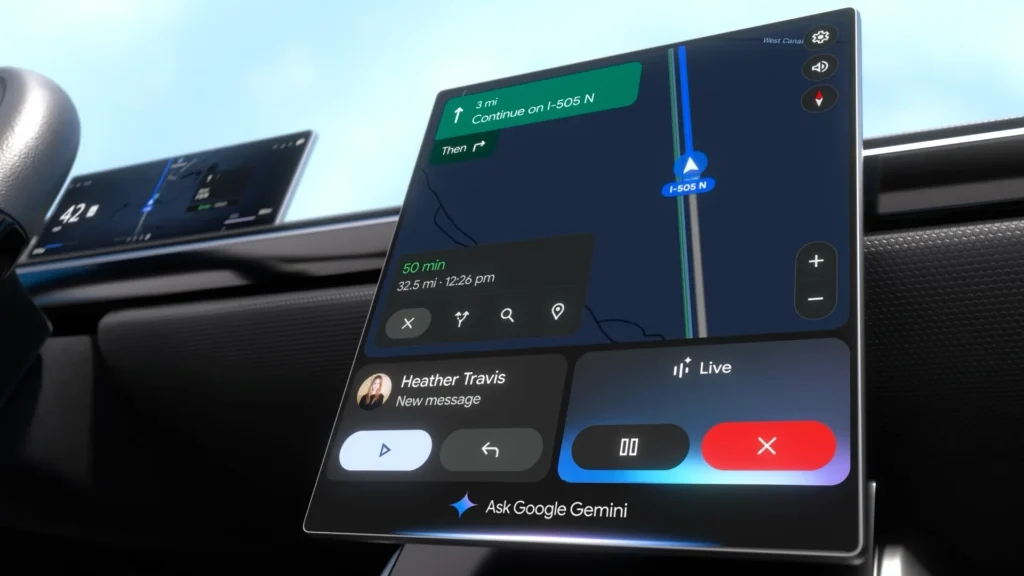
For drivers, Google built-in is becoming a bigger factor in how a car works day to day. It is no longer only about having Maps on the dashboard. It is also about how the car handles questions, route changes, messages, media, EV charging, and vehicle features.
For car shoppers, infotainment software may become a more important part of the buying decision. People already compare safety systems, fuel economy, range, screen size, and driver-assist features. Now, they may also compare how well the car understands voice requests and supports connected services.
The best version of this update is not a car that talks more. It is a car that understands better, interrupts less, and helps drivers get answers without extra steps.
Gemini in Google built-in is still rolling out, and the experience will vary by vehicle. But the direction is clear. The dashboard is becoming a more capable part of the driving experience, and voice control is moving from short commands toward real conversation.
For everyday users, that could make the car easier to use. For Google and automakers, it points to a larger shift: the next major AI interface may already be sitting in the center console.
Citations
- Agnihotri, Alankar. “Your Car with Google Built-In Is About to Get Smarter, Thanks to Gemini.” The Keyword, Google, 30 Apr. 2026.
- “Cars with Google Built-In.” Google Built-In, Google.
- “GM Brings Google Gemini to Millions of Vehicles on the Road.” General Motors Newsroom, General Motors, 28 Apr. 2026.
- “Set Up Gemini or Google Assistant for Your Car.” Google Help, Google.