Key Takeaways
- GPT-5.3 Instant is an update to ChatGPT’s most-used model, aimed at making everyday conversations feel smoother and more consistently useful.
- OpenAI says GPT-5.3 Instant reduces unnecessary refusals and cuts back on overly defensive preambles that interrupt the flow of an answer.
- GPT-5.3 Instant is also intended to deliver better, better-contextualized results when ChatGPT uses the web.
- Early coverage echoes these goals, describing fewer “dead ends,” fewer caveats, and fewer hallucinations compared with the prior version.
GPT-5.3 Instant: What’s Changed and Why We’ll Notice It
When a tool becomes part of daily life, the small friction points start to matter more than flashy new features. That is the idea behind GPT-5.3 Instant. OpenAI frames GPT-5.3 Instant as an update focused on what people experience most often: tone, relevance, and conversational flow.¹ In other words, GPT-5.3 Instant is meant to feel better in the moments that happen a hundred times a week—asking a quick question, drafting a message, or sorting through a topic that we do not fully understand yet.
OpenAI highlights a few specific problem areas that GPT-5.3 Instant targets: answers that stall out, answers that come wrapped in extra warnings, and replies that sound overly declarative in a way that can feel jarring.¹ If we have ever asked a normal question and gotten a response that felt like a detour, we already understand why GPT-5.3 Instant is positioned as an “everyday” update.
How GPT-5.3 Instant Handles Refusals and Overly Defensive Replies
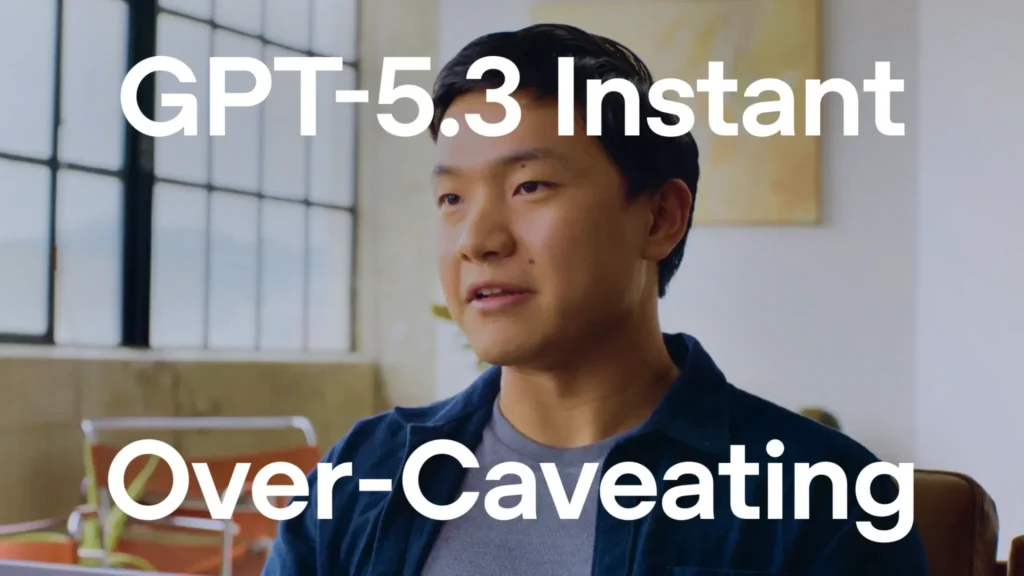
One of the clearest promises tied to GPT-5.3 Instant is fewer unnecessary refusals. OpenAI says GPT-5.3 Instant “significantly reduces unnecessary refusals,” and it also tones down defensive or moralizing preambles before answering.¹ The goal is not to remove guardrails. The goal is to avoid moments where the model refuses a request even though a useful, safe answer is available.
For regular users, this matters because it changes the rhythm of the conversation. With GPT-5.3 Instant, OpenAI’s intent is that when a useful answer is appropriate, the model should provide it directly and stay focused on the question without burying the lead under extra caveats.¹ That is an experience change we can feel immediately, even if we never read a technical description of what changed behind the scenes.
More Useful Answers When GPT-5.3 Instant Uses the Web

GPT-5.3 Instant also targets a familiar issue: web-based answers that are either too thin (just a summary) or too noisy (a pile of loosely related points). OpenAI says GPT-5.3 Instant improves the quality of answers when information comes from the web by balancing what it finds online with its existing knowledge and reasoning.¹ The key word there is balance. When ChatGPT pulls from the web, the user does not want a random scrapbook of links. We want a coherent response that tells us what matters, what changed, and what we should pay attention to.
Coverage of the release describes the same direction: better contextualized results when searching the web, plus fewer dead ends and fewer caveats.² That lines up with OpenAI’s positioning of GPT-5.3 Instant as an update aimed at usefulness in real conversations, not just abstract evaluation scores.
A Smoother Writing Experience in GPT-5.3 Instant
OpenAI also describes GPT-5.3 Instant as a stronger writing partner with more range and “texture.”¹ We do not need to treat that as a promise that everything will suddenly be perfect. But we can take it as a statement of priorities: GPT-5.3 Instant is tuned to write in a way that feels more natural, while still staying clear.
If we use ChatGPT for writing—emails, outlines, short scripts, captions, or simple explanations—this focus on tone can be the difference between text that reads like a person wrote it and text that reads stiff. GPT-5.3 Instant is explicitly aimed at reducing phrasing that interrupts the flow of conversation.¹ When writing is part of the conversation, that same goal applies.
What GPT-5.3 Instant Is Not
It helps to be clear about what GPT-5.3 Instant is not. This is not described as a brand-new product category. It is an update to the “most-used model” in ChatGPT.¹ That means we should expect day-to-day improvements rather than a sudden change in what the tool is capable of doing.
We should also avoid reading too much into broad claims. OpenAI says GPT-5.3 Instant delivers more accurate answers and reduces certain kinds of frustrating behavior.¹ Early coverage repeats the theme, noting fewer hallucinations.² But accuracy is not a switch that gets flipped forever. The responsible way to use GPT-5.3 Instant is the same as before: treat it like a strong assistant, not a final authority. When something really matters—health, legal decisions, money, safety—we should still verify with primary sources and professionals.
Availability and Timing: When GPT-5.3 Instant Shows Up

OpenAI states that GPT-5.3 Instant is available starting today to all users in ChatGPT, and it is also available to developers in the API as “gpt-5.3-chat-latest.”¹ OpenAI also says GPT-5.2 will remain available for three months for paid users under a Legacy Models section, with retirement set for June 3, 2026.¹
Those details matter because they set expectations. If we are comparing behavior across versions—especially for writing style and refusals—knowing which model we are on is the difference between “this feels different” and “this is the update.”
How We Can Get Better Results From GPT-5.3 Instant
GPT-5.3 Instant is designed to reduce friction, but we still control a lot of the outcome by how we ask. A few habits tend to produce better results with GPT-5.3 Instant and similar models:
- Ask for the format we want. If we want bullet points, a short summary, or step-by-step instructions, say so up front.
- Give the right context. A short sentence about the goal (“we’re writing a note to a teacher,” “we’re comparing two options,” “we’re trying to understand the basics”) helps GPT-5.3 Instant stay on target.
- Request sources when the topic is time-sensitive. GPT-5.3 Instant is intended to do better with web context.¹ When the topic depends on dates and updates, asking for sources is still a good habit.
These are simple moves, but they pair well with what GPT-5.3 Instant is trying to do: stay focused, avoid dead ends, and keep the conversation moving.¹
Why GPT-5.3 Instant Matters for Everyday Users
The biggest story with GPT-5.3 Instant is not a new feature checklist. It is that OpenAI is emphasizing the “feel” of the experience—how often we get a direct answer, how often we hit a wall, and how natural the responses read.¹ For the majority of people who use ChatGPT casually or for everyday tasks, that is the difference between a tool we keep using and a tool we stop opening.
If GPT-5.3 Instant delivers on fewer unnecessary refusals, better web context, and fewer awkward detours, it becomes easier to rely on ChatGPT as a steady part of work and life—without needing to be an expert to get value from it.¹²
Citations
- OpenAI. “GPT-5.3 Instant: Smoother, more useful everyday conversations.” OpenAI, 3 Mar. 2026.
- Clover, Juli. “ChatGPT Gets GPT-5.3 Instant Update With Less ‘Cringe,’ Fewer Hallucinations.” MacRumors, 3 Mar. 2026.