Google’s AI Overviews and AI Mode are changing how Search connects answers to sources. Google’s latest update adds more links, article suggestions, website previews, subscription labels, and firsthand perspectives, giving us more ways to check where AI answers come from and decide what to read next.¹
Key Takeaways
- Google is adding more source links inside AI Overviews and AI Mode.
- New article suggestions may help readers move beyond quick summaries.
- Subscription labels can make paid news sources easier to spot.
- Forum posts, social posts, and public discussions may appear more often in AI search results.
- The update matters because AI answers are becoming a bigger part of everyday search.
AI Overviews and AI Mode Are Becoming More Source-Focused
Google Search is changing fast. For many questions, we no longer see only a page of blue links. We may also see an AI-written answer near the top of the results.
That answer can be useful when we want a quick starting point. But it also raises a fair question: where did the information come from?
Google’s May 6, 2026 update tries to answer that. The company says it is adding new ways for AI Overviews and AI Mode to point readers toward websites, original articles, public discussions, and sources they already value.¹
This is not a small design change. It affects how we search, how we check information, and how publishers may still earn attention in an AI-heavy version of Google.
What Changed in Google’s AI Search Update
Google outlined five updates. Together, they make AI Overviews and AI Mode less like a final answer box and more like a starting point for further reading.
More Article Suggestions After AI Answers
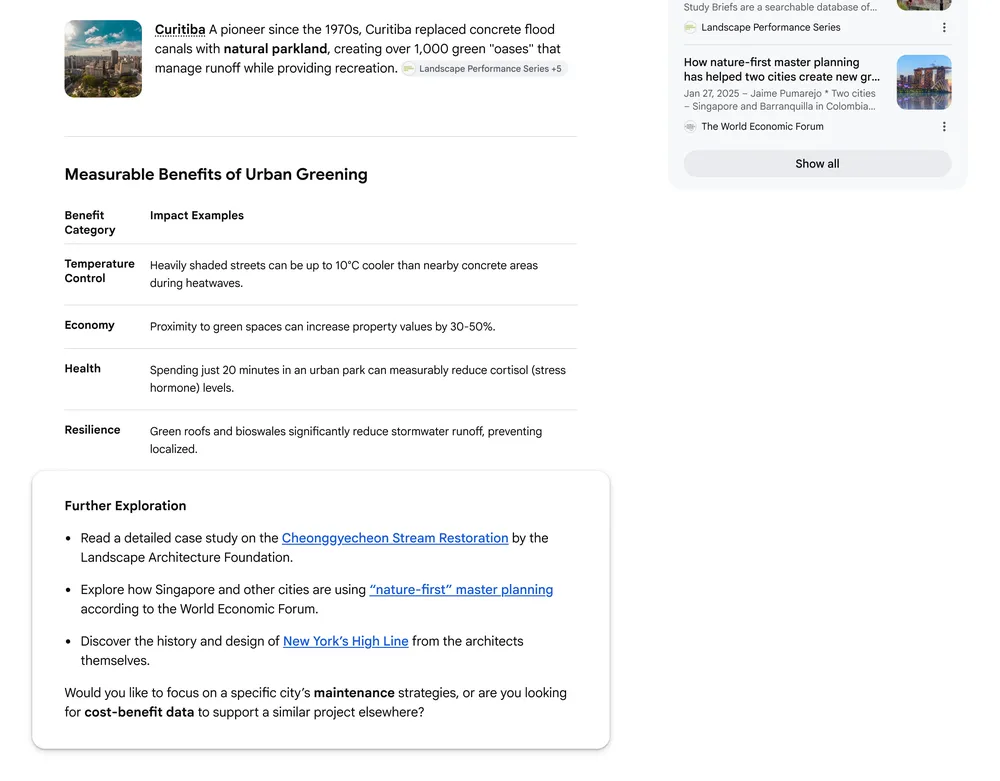
Google says many AI responses will now include suggestions for where to go next. These links may point to articles, reports, case studies, or deeper coverage on related parts of a topic.¹
That matters because many searches do not end with one answer.
If we search for how cities add green space, we may want more than a short summary. We may want examples from different cities, project costs, design choices, or lessons from past plans. Google used this kind of city-planning search as one example of how article suggestions may appear.¹
For readers, this can make AI search more useful. The summary gives us the first layer. The linked articles give us room to keep reading.
News Subscription Labels in AI Search
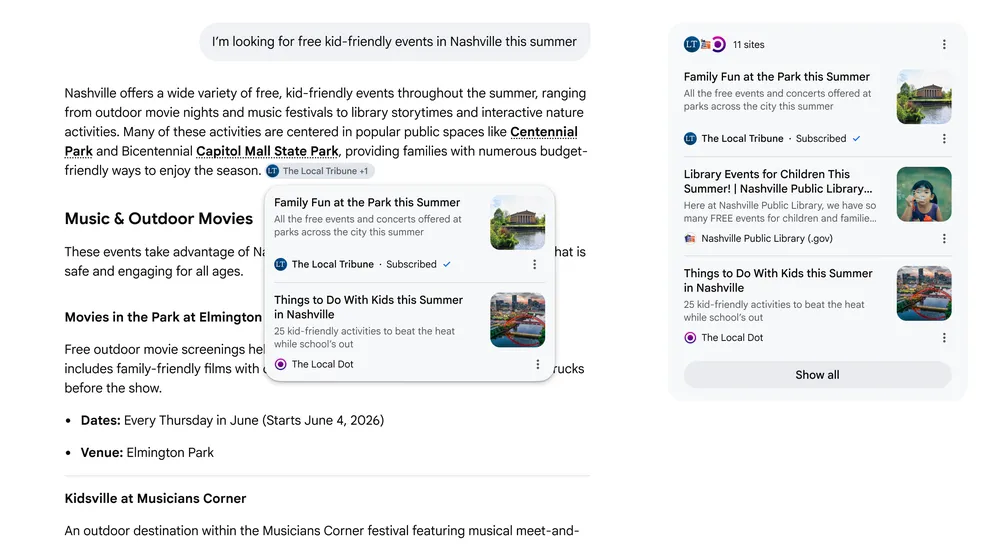
Google is also adding labels for links from a user’s news subscriptions. If we pay for a news outlet, Google may show that source more clearly inside AI Overviews and AI Mode.¹
That is a meaningful shift for people who already subscribe to newspapers, magazines, or local news sites. A label can help us spot sources we trust without scanning every result.
It may also matter for publishers. AI summaries have raised concerns that readers may stop clicking through to original reporting. Subscription labels could help some paid outlets stay visible when their reporting supports an AI answer.
Firsthand Perspectives From Public Discussions
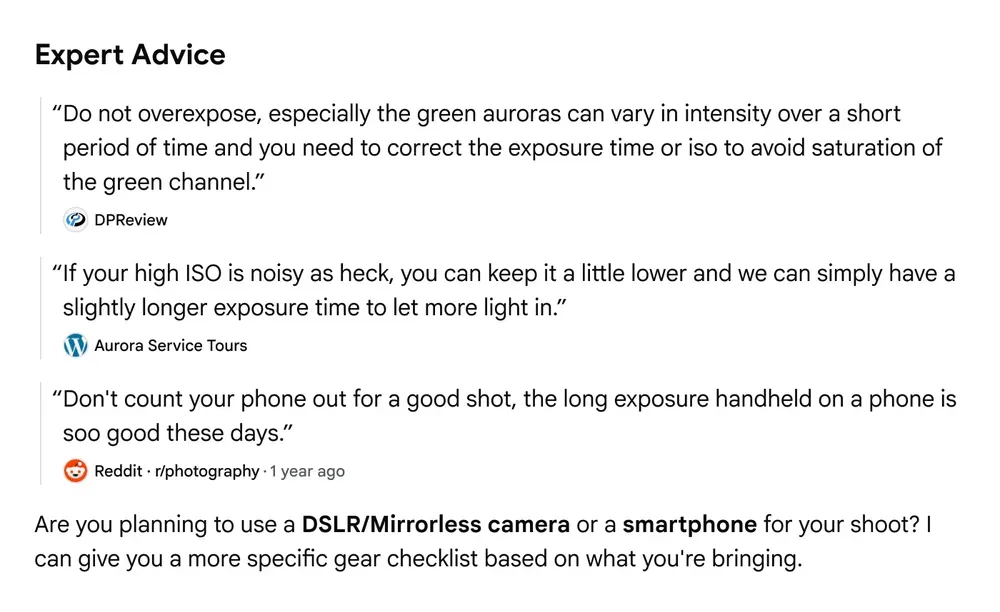
Another update brings more public discussion into AI search. Google says AI responses may include previews from forums, social platforms, and other firsthand sources.¹
This matches how many people already search. When we want real feedback, we often look for forum threads, product discussions, travel advice, repair posts, or comments from people who have dealt with the same issue.
Google says these previews may include extra context, such as a creator name, handle, or community name.¹ That context can help us judge whether a source is worth opening.
Still, this part needs care. Firsthand posts can be valuable, but they are not always complete or accurate. They work best when we treat them as one piece of the picture, not the final answer.
Why This Is Getting Attention Right Now
The bigger story is not only that Google added more links. It is that AI search is becoming a normal part of how people use the web.
Google says AI Overviews are meant to help people find information faster and then use links to learn more.² AI Mode goes further by letting users ask longer questions and follow-ups in a more conversational search flow.³
That creates a new tension. If Google answers more questions directly, will people still visit the websites that created the information?
The latest update suggests Google knows that concern is not going away. By adding more inline links, article suggestions, previews, and source labels, Google is trying to keep the web visible inside AI search.
For readers, the issue is trust. For publishers, it is traffic. For Google, it is whether AI search can help people move quickly without cutting them off from the sources behind the answer.
What Most People May Miss About the Update
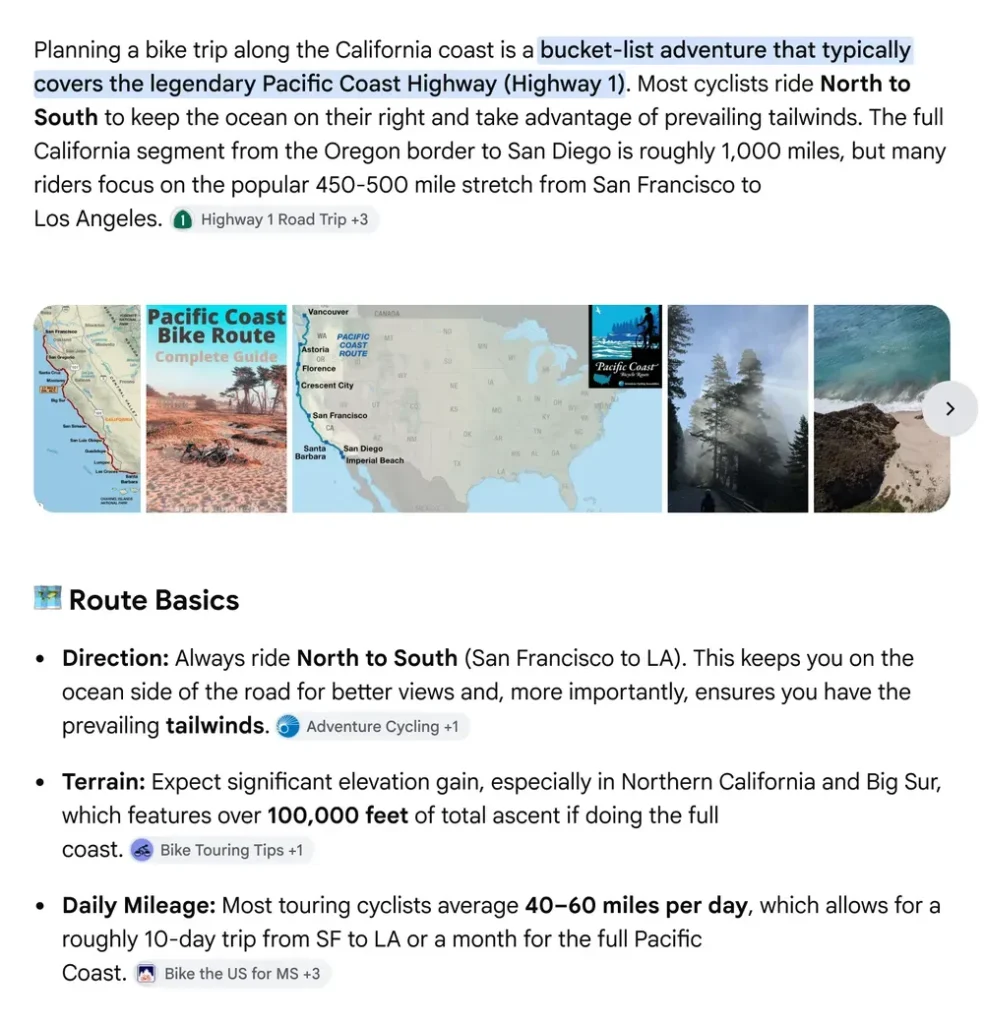
The most important change may be where links appear.
Google says it will show more links directly inside AI responses, placed near the relevant text.¹ That means we may not need to scroll to the bottom of an answer to find a source.
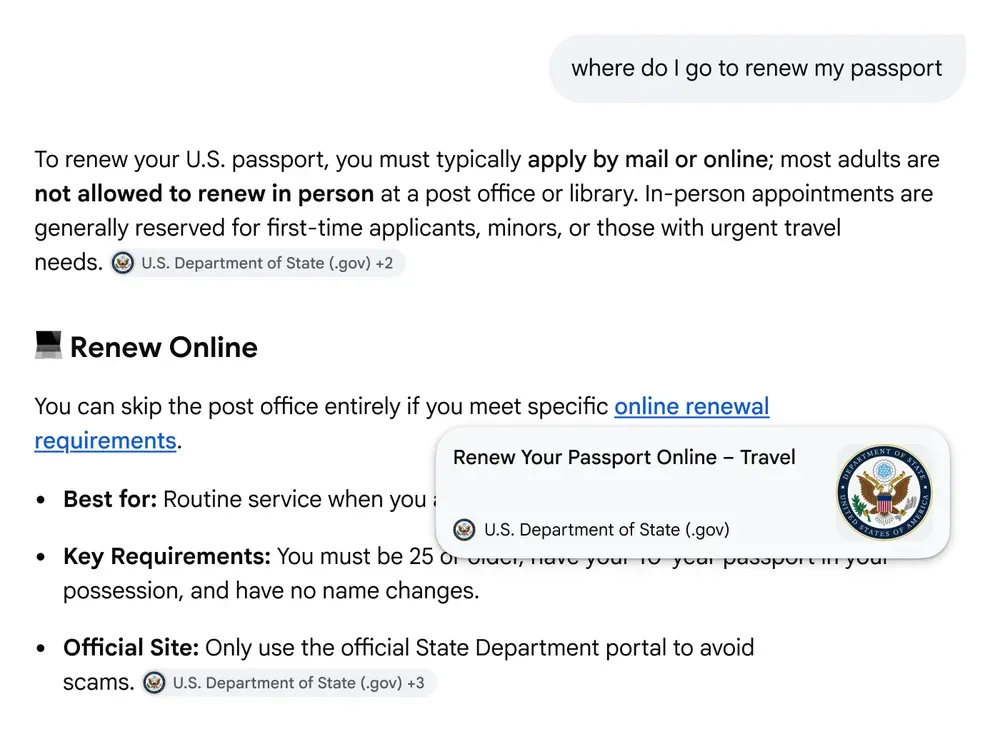
If an AI answer mentions bike-route terrain, a link beside that detail could lead to a route guide. If it mentions passport renewal steps, a nearby preview may show that the link goes to a government website.¹
That placement matters. We are more likely to check a source when it appears at the exact moment we need it.
Google is also adding desktop previews for inline links. When we hover over a link, we may see details such as the website name or page title before clicking.¹ That can reduce the guesswork that often comes with search results.
How AI Overviews and AI Mode Could Affect Everyday Searches
For most users, the change will show up in ordinary searches.
If we are planning a trip, AI Overviews and AI Mode may summarize key details and point us to local guides, travel posts, public discussions, or official sources.
If we are comparing products, the AI answer may surface common differences and link to reviews, brand pages, or user discussions.
If we are following a news topic, subscription labels may help us find reporting from sources we already pay for.
If we are learning about a new subject, article suggestions may help us move from a quick summary to a fuller explanation.
The best use case is not blind trust. It is faster orientation with easier source checking.
The Limits We Should Keep in Mind
More links do not make AI answers perfect.
AI summaries can still leave out context. They can make unsettled topics sound more certain than they are. They may also mix strong sources with weaker ones.
Google’s Search Central guidance says site owners can manage how their content appears in AI features through standard Search controls.⁴ That means readers still need to judge the original source, not just the summary.
For health, money, legal issues, safety, or major purchases, we should open the sources and compare details. AI search can help us start. It should not replace careful reading when the stakes are high.
What This Means for Publishers and Website Owners
For publishers, the update brings both opportunity and uncertainty.
More links inside AI Overviews and AI Mode could send readers to original articles. But many users may still read the AI answer and stop there.
That means websites need to offer something a short summary cannot fully replace. Original reporting, clear examples, expert input, data, local context, product testing, and strong comparisons all matter more in this kind of search environment.
Google’s own AI Overviews page frames the feature as a way to get help with searches while still accessing links across the web.⁵ For publishers, the challenge is earning one of those visible spots with content that is accurate, useful, and worth the click.
The Bottom Line
AI Overviews and AI Mode are becoming a larger part of Google Search, and Google’s latest update makes sources more visible inside those AI results.
That is good news for readers who want quick answers without losing the trail back to original material. It may also help publishers stay part of the search experience as AI summaries become more common.
The safest way to use the feature is clear: read the answer, check the links, compare sources, and pay attention to who created the information.
AI search can save time. Trust still comes from the source behind the answer.
Citations
- Budaraju, Hema. “5 New Ways to Explore the Web with Generative AI in Search.” The Keyword, Google, 6 May 2026.
- “Find Information in Faster & Easier Ways with AI Overviews in Google Search.” Google Search Help, Google.
- “Get AI-Powered Responses with AI Mode in Google Search.” Google Search Help, Google.
- “AI Features and Your Website.” Google Search Central, Google.
- “Google AI Overviews – Search Anything, Effortlessly.” Google Search, Google.