Key Takeaways
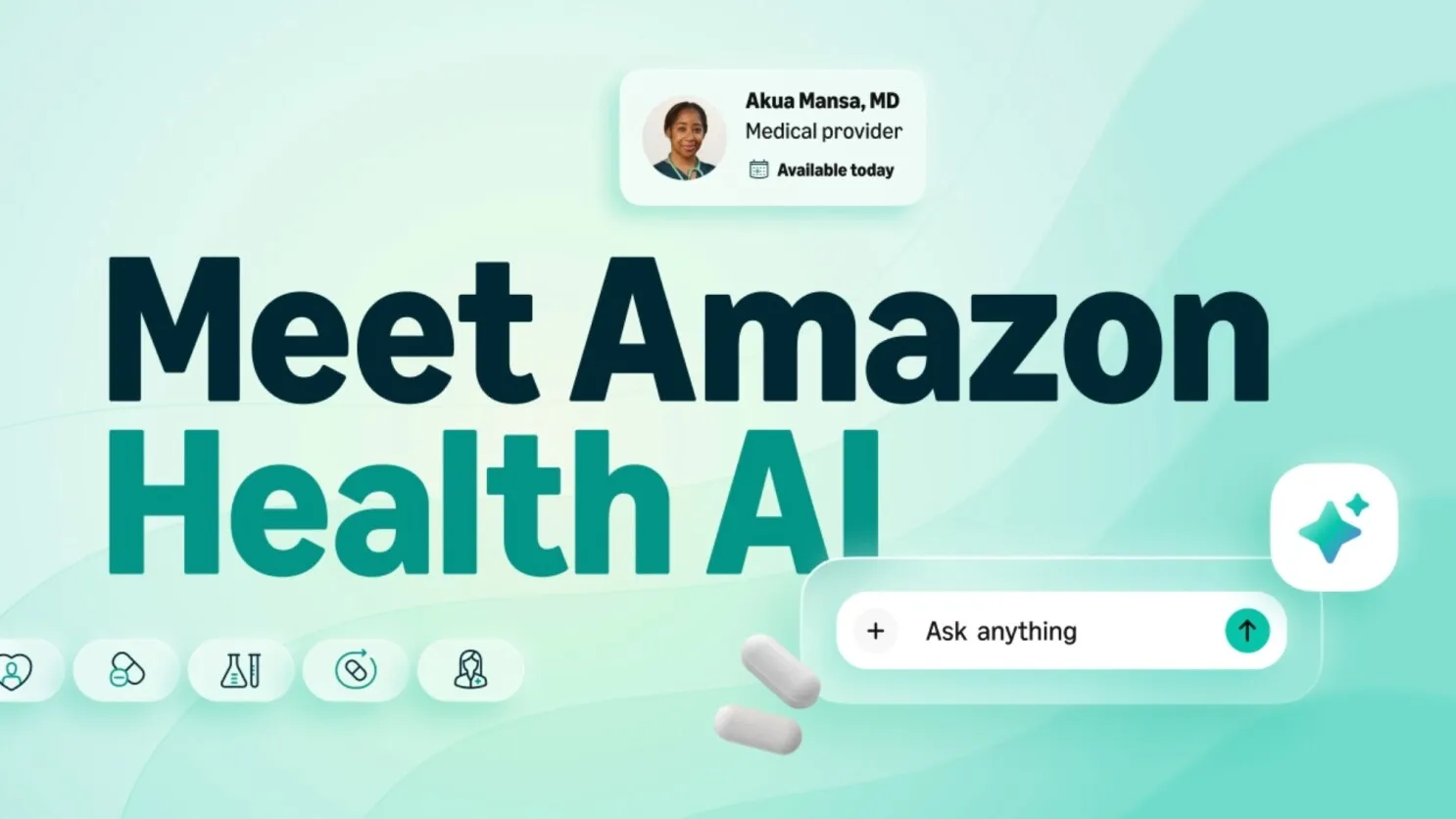
- Amazon Health AI is now available on Amazon’s website and app, giving customers a new way to ask health questions and take care-related actions in one place.
- The service can explain health records, help with prescription renewals, answer symptom and medication questions, and book appointments through Amazon One Medical.
- Users do not need to be Prime members or One Medical members to use Amazon Health AI, though some care benefits are tied to Prime eligibility.
- Eligible Prime members can get free direct-message care visits for more than 30 common conditions through the service, subject to limits and restrictions.
- Amazon says the tool is designed to support care decisions and connect people with licensed providers when human medical judgment is needed.
Why Amazon Health AI Matters Right Now
Getting care often starts with uncertainty. We notice a symptom, read a lab result we do not understand, or realize a prescription is running low. Then the usual cycle begins: searching online, opening patient portals, comparing advice, and trying to decide whether the issue is minor or needs attention right away.
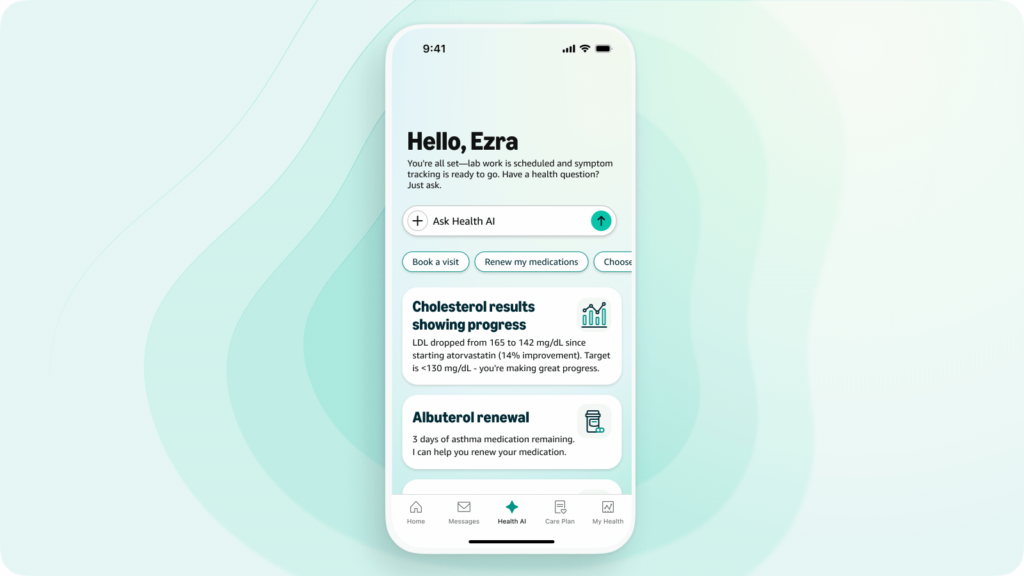
That is the space Amazon is trying to address with Amazon Health AI. The new service, now available through Amazon’s website and app, is meant to give people a simpler starting point for routine health questions and common care tasks. According to Amazon, it can answer health questions, explain records, help manage medications, and book appointments.¹ Reuters reported that the rollout expands access beyond the original One Medical app launch, making the assistant available more broadly to Amazon customers.²
The idea is not complicated, and that may be the point. Most people are not looking for a technical health product. We want a clear answer, a sensible next step, and less friction along the way. Amazon Health AI is being positioned as that first layer of support. Readers who want a little more context on where this fits can also see how AI in healthcare is changing patient care.
Amazon Health AI and the Shift Toward Simpler Care
Healthcare systems often feel scattered. One app holds test results. Another handles prescriptions. A different service manages appointments. General health searches may answer a question, but they rarely move us any closer to care.
Amazon Health AI tries to pull those early steps together. Amazon says the service can provide personalized health information and take action, including scheduling appointments and helping with prescription renewals.¹ Reuters added that it can also explain medical results, assess symptoms, and answer questions about medications.²
That combination matters because information alone is rarely enough. A person who understands a lab result but still has no easy way to contact a provider is only halfway helped. Amazon Health AI is more notable because it connects guidance with action. It aims to shorten the distance between asking a question and getting care.
How Amazon Health AI Works With One Medical
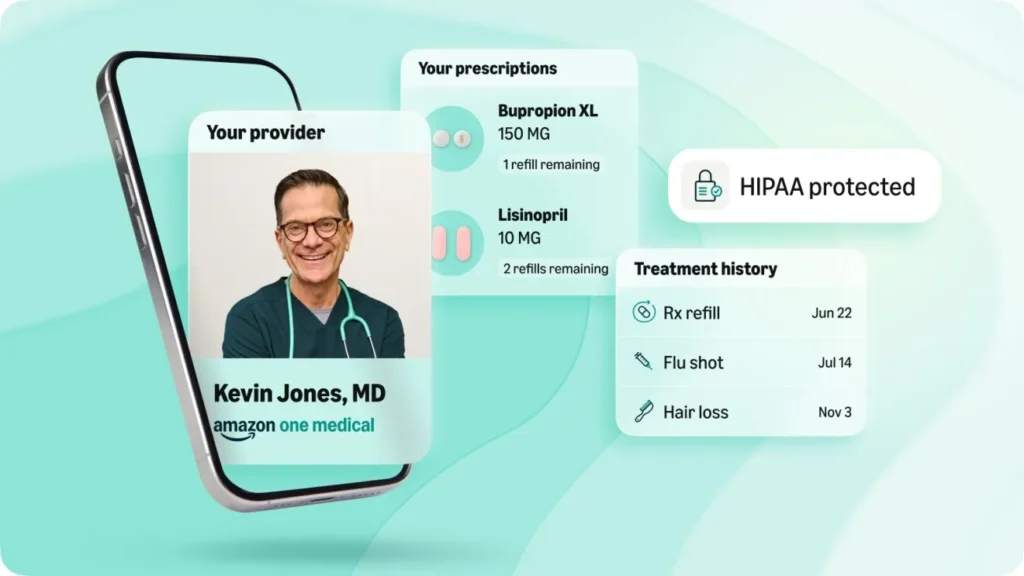
Amazon Health AI connects questions with real care options
One reason Amazon Health AI stands out is its connection to Amazon One Medical. This is not just a general question tool sitting by itself. It links users to care services that can move them beyond information and into treatment pathways when needed.¹
Amazon says the system can help users:
- ask general health questions,
- understand medical records and lab results,
- manage prescription renewals,
- book appointments, and
- connect with One Medical providers.¹
Reuters reported that the assistant does not create treatment plans, which is an important boundary. Instead, it helps with the parts of the process that often confuse or delay people, then directs them to human providers when the situation calls for medical judgment.²
That distinction is worth keeping in view. Amazon Health AI is not being presented as a replacement for clinical care. It is being presented as a way to make care easier to start. That same idea shows up in other healthcare tools, including AI triage systems that help sort next steps.
What Prime Members Get Through Amazon Health AI
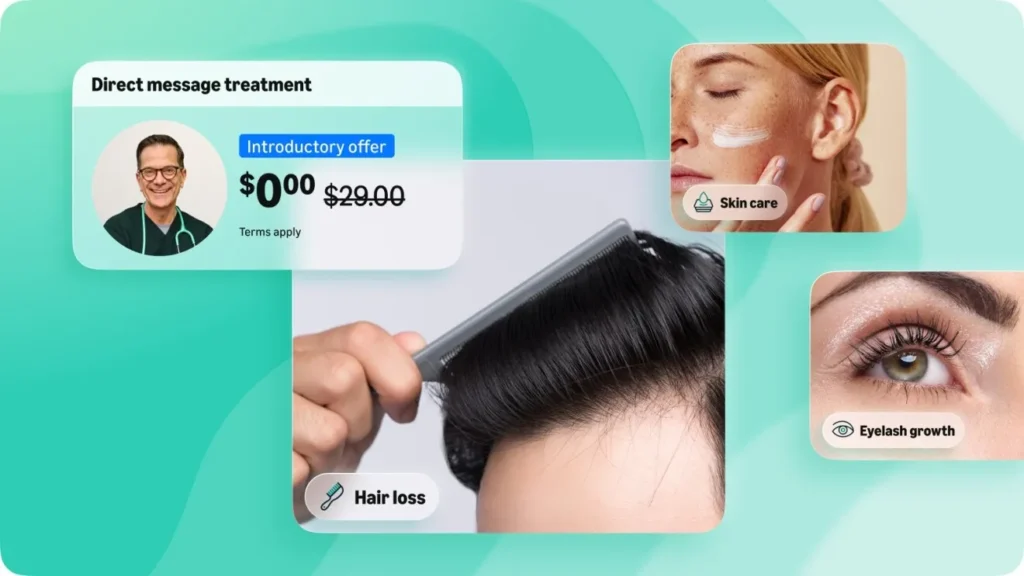
Amazon is also using Amazon Health AI to add new value to Prime. According to the company, eligible Prime members using the service can get free direct-message care visits with a One Medical provider for more than 30 common conditions.¹
That offer is meaningful, but it is best understood clearly. It does not mean unlimited, all-purpose virtual care for everything. It refers to direct-message care for a specific set of common conditions, and Amazon says eligibility rules and restrictions apply.¹ Reuters also reported that provider consultations may otherwise carry a fee for non-members, depending on the situation.²
That makes the Prime angle important for two reasons. First, it lowers the barrier for trying the service. Second, it shows that Amazon Health AI is not only about answering questions. It is part of a broader effort to connect digital guidance, provider access, and ongoing care services inside one consumer-facing system.
What Amazon Health AI Can and Cannot Do

The strongest health tools tend to be the ones that stay within clear limits. Amazon appears to understand that. The company says Amazon Health AI is designed to support the relationship between patients and providers, not replace it.¹
That is a useful guardrail. It suggests the service is best for common, lower-stakes moments such as:
- checking what a result may mean,
- asking about symptoms,
- reviewing medication questions,
- figuring out whether care may be needed, or
- taking care of simple follow-up tasks.¹²
When more expertise is needed, Amazon says the system can route users to clinicians.¹ Reuters similarly reported that the assistant can connect patients with human healthcare providers when necessary.²
This matters because trust in health tools depends not only on what they can do, but also on whether they know when to stop. In healthcare, overpromising is a fast way to lose confidence.
The Privacy and Trust Question
Any service involving health information has to clear a higher standard. Convenience matters, but trust matters more.
Amazon says Health AI operates in a HIPAA-compliant environment and includes privacy and security protections around health information.¹ That will reassure some users, but privacy expectations in healthcare are understandably strict. People will want to know what the system can access, how it uses that information, and where the boundaries are between health services and Amazon’s broader consumer business.
Reuters reported another detail that will likely draw attention: the assistant can use medical data and analyze health-related purchases to improve its responses.² That does not automatically make the product unsafe, but it does make transparency even more important. The more personal the service becomes, the more clearly users will expect those data practices to be explained.
Why Amazon Health AI Could Change Everyday Habits
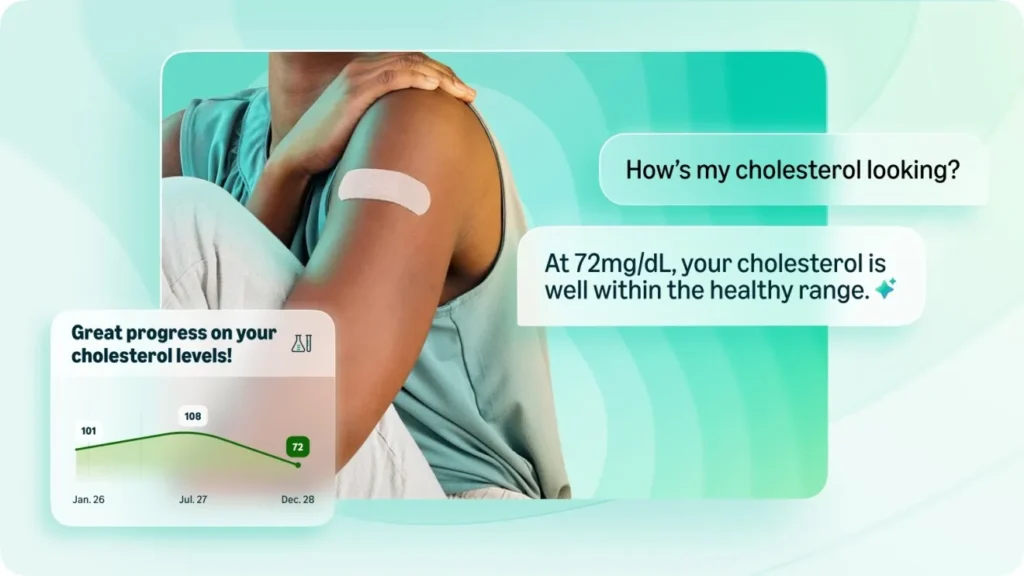
The larger story here is not just that Amazon launched another AI product. It is that the company is trying to place Amazon Health AI at the very beginning of the care journey, where many decisions are still uncertain and many people feel stuck.
That approach could change behavior in small but meaningful ways. If people can get a clear explanation faster, they may be less likely to ignore symptoms. If they can reach care more easily, they may be less likely to put off follow-up. If they can handle records, prescriptions, and appointments in one flow, healthcare may feel less fragmented.
None of that means the system solves deeper problems in American healthcare. It does not fix cost, coverage, or provider shortages. But it may make routine healthcare tasks feel less confusing, and that alone can make a real difference in everyday life.¹² The launch also fits Amazon’s wider pattern of adding AI to consumer experiences, something we have also seen with Amazon Rufus and its shopping assistant rollout.
Final Thoughts on Amazon Health AI
Amazon Health AI is not being sold as a cure-all, and that is probably for the best. Its real promise is simpler than that. It aims to make common health questions easier to handle, routine care tasks easier to manage, and access to providers easier to reach.
That may sound modest, but modest changes often matter most in healthcare. A quicker answer. A clearer explanation. A more direct path to care. Those are the moments people remember.
If Amazon Health AI can do those things consistently, while respecting the limits and privacy expectations that health services require, it could become a useful part of how many people begin handling everyday care.¹²
Citations
- Bulusu, Prakash, and Andrew Diamond. “Amazon Launches Health AI Agent on Amazon Website and App with Free 24/7 Access to Virtual Care for Prime Members.” About Amazon, 10 Mar. 2026.
- Berg, Nat. “Amazon Launches Healthcare AI Assistant on Its Website, App.” Reuters, 10 Mar. 2026.