Key Takeaways:
1. ChatGPT Health acts as a private, secure hub for medical records and fitness data.
2. The feature is currently in a waitlist phase for early users on Free, Plus, and Pro plans.
3. It helps translate confusing lab results and prepares you for doctor appointments.
4. Your medical data is compartmentalized and is never used to train public AI models.
We’ve all felt that specific sinking feeling when we realize our health data is scattered across five different apps, three hospital portals, and a stack of paper notes from 2022. It’s a mess. Honestly, the modern healthcare experience is a full-time job of just trying to remember your own history. We’re convinced that the biggest hurdle to feeling healthy isn’t a lack of information—it’s the fact that our information doesn’t live in the same house. This is why the news about ChatGPT Health feels like a necessary shift. It’s designed to be a dedicated, secure space where your medical records and your daily habits finally talk to each other.1
The 5 Vital Solutions for Data Chaos
The core idea behind ChatGPT Health is to create a “grounded” conversation. Instead of getting generic advice from a search engine, you can securely connect tools like Apple Health, MyFitnessPal, or even your actual medical records through a network called b.well. I was using my laptop to look at a PDF of my recent blood work and I noticed that I had to Google every single acronym just to understand if I was okay. It’s a tedious, stressful way to live. With ChatGPT Health, the system can see those results and summarize them in plain English, helping you see patterns in your cholesterol or sleep over time rather than just a single, confusing moment in time.
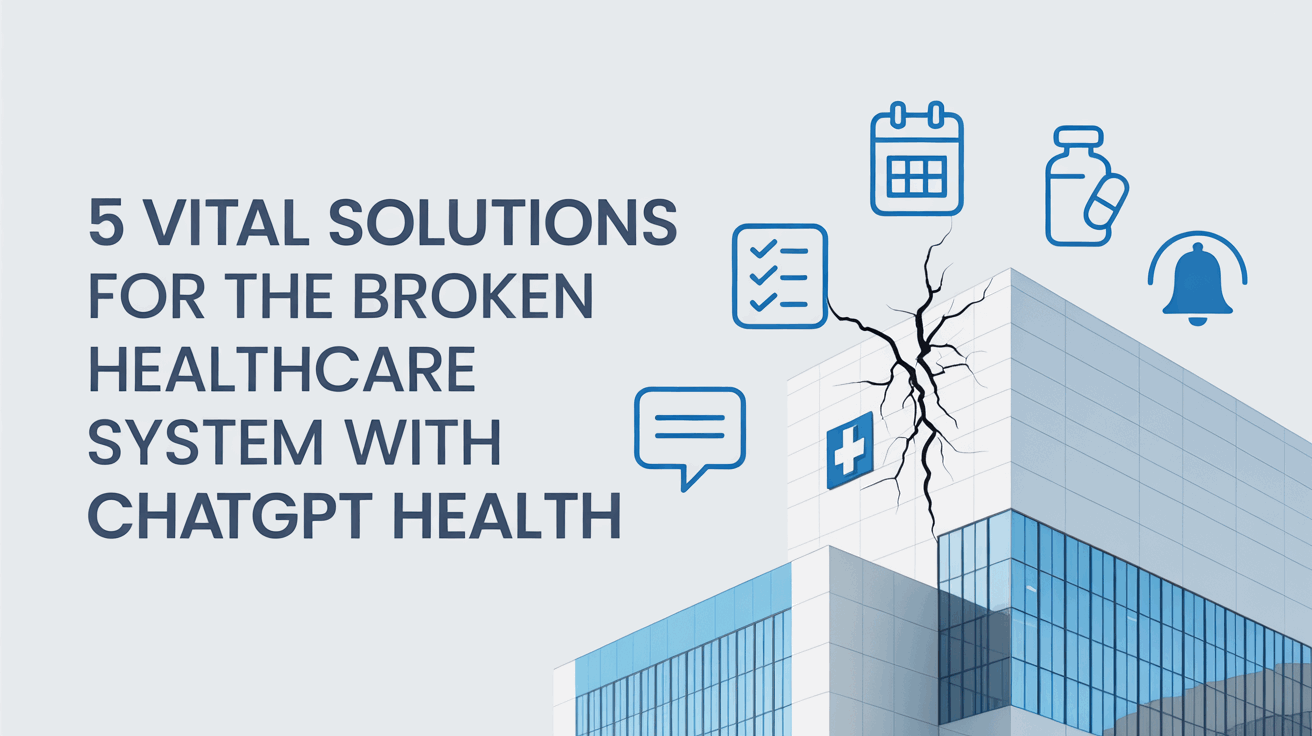
What makes this feature stand out is that it’s built to support your doctor, not replace them. We’ve heard the “waitlist” is starting small so they can refine the experience, but the goal is clear: to make you feel prepared for that 15-minute window you get with a specialist.2 Here are the five vital solutions this new space provides for the everyday patient:
1. Simplifying Lab Results: It takes the “alphabet soup” of blood work and explains what your numbers actually mean for your lifestyle.
2. Appointment Preparation: It generates a tailored list of questions based on your specific history so you don’t forget the important stuff at the clinic.
3. Insurance Guidance: By looking at your healthcare patterns, it helps you understand the pros and cons of different insurance plans based on your actual needs.
4. Actionable Nutrition and Fitness: It connects with apps like MyFitnessPal to give you realistic exercise and diet guides that actually fit your medical context.
5. Summarizing Care Instructions: It can turn a long, technical summary from a hospital visit into a simple, clear set of next steps you can actually follow.
The Most Critical Part: A Vault for Your Vitals
If we’re going to talk about medical data, we have to talk about the “creep factor.” We are tired of the idea that our personal business is just more “content” for a machine to learn from. This is the part we care about the most: ChatGPT Health is built with layered, purpose-built encryption and isolation. This isn’t just a new tab; it’s a separate space.
The Grumble: Why is My Health Data Held Hostage?
Here is a major pet peeve of ours: why is it easier to transfer $500 between banks than it is to send a vaccination record from a pharmacy to a clinic? We’ve been forced into this “portal fatigue” where every doctor has their own login, their own app, and their own way of hiding your results behind clunky interfaces. It’s 2026, yet we’re still playing middleman for our own data. ChatGPT Health trying to bridge this gap is great, but the fact that the healthcare industry makes it this hard in the first place is an annoying, systemic failure.
To address this, the developers ensured that conversations within the Health space never flow back into your regular chats. More importantly, your medical information is never used to train the models that everyone else uses. You have total control—you can delete your “health memory” or disconnect an app whenever you want. We believe this “walled garden” approach is the only way to handle something as sensitive as a heart rate or a prescription list.5
Physician-Led Safety and Real-World Use
We shouldn’t trust health tools that are built in a vacuum. To avoid the “hallucinations” or weird errors that sometimes happen with technology, this feature was developed with over 260 physicians across dozens of specialties.4 They created a framework called HealthBench to make sure the responses are safe and clear.
When you finally get off the waitlist, you’ll be able to connect tools like Peloton or Weight Watchers to see how your workouts are actually affecting your vitals.3 By making the data retrieval part of the job invisible and automatic, ChatGPT Health lets you focus on actually feeling better.
How to Get on the List
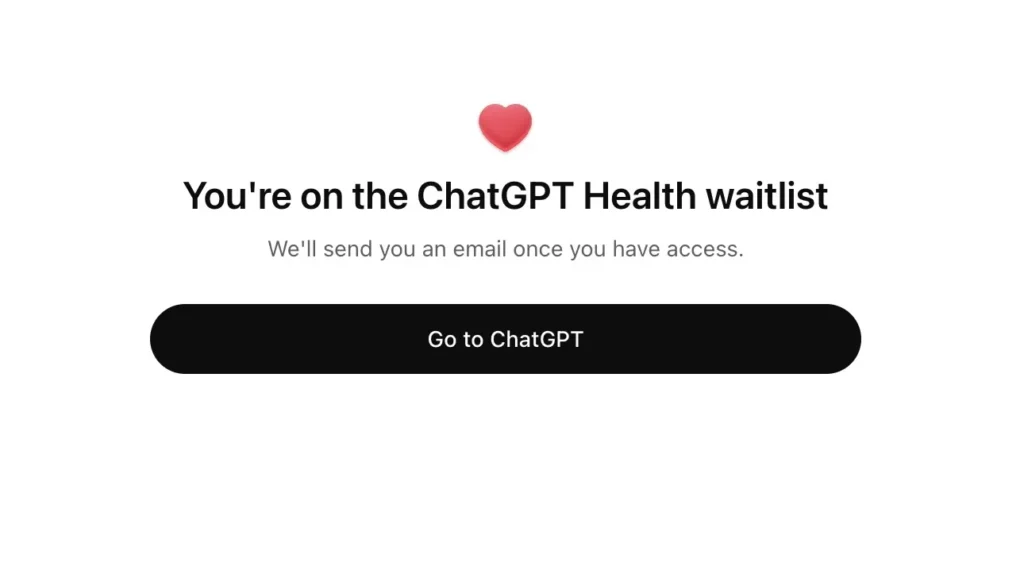
Right now, ChatGPT Health is rolling out to a small group of early users first. If you’re on a Free, Plus, or Pro plan and live in the U.S. (or outside the UK/EEA), you can sign up for the waitlist. It’s not a wide-open door yet, but we expect to see it hit web and iOS apps for everyone in the coming weeks. We’re finally seeing a path out of the disorganized, confusing world of medical paperwork. It’s about time our technology caught up to our needs.
Citations
- Altman, Sam. “Introducing ChatGPT Health.” OpenAI, 7 January 2026.
- Diaz, Naomi. “OpenAI Launches ChatGPT Health.” Becker’s Hospital Review, 7 January 2026.
- Beaty, Artie. “Use ChatGPT for Medical Advice? Try Its New Health Mode.” ZDNET, 7 January 2026.
- Olsen, Emily. “OpenAI Launches Health-Specific ChatGPT.” Healthcare Dive, 8 January 2026.
- HIPAA Journal. “Is ChatGPT HIPAA Compliant?” HIPAA Journal, 9 January 2026.