Key takeaways
- Many AI predictions for 2026 come down to one thing: AI gets built into tools you already use, and it costs less to run.
- “Do-it-for-me” features will grow, but mostly for specific tasks, not entire jobs.
- More companies will expect AI outputs to come with context (sources, notes, and labels).
- Europe’s AI rules will keep influencing how global companies build and sell AI tools.
- Energy and data center limits will affect what AI features roll out widely.
If you’re looking for AI predictions that don’t sound like a movie plot, you’re in the right place. These seven AI predictions focus on what’s already happening in everyday products and in how companies are using AI, then take the next reasonable step into 2026—without getting carried away.
1) AI will feel more “built-in” to everyday apps

One of the safest AI predictions for 2026: you’ll use more AI without thinking about it. Instead of opening a separate AI website, you’ll see AI baked into your email, documents, customer support chats, shopping apps, and workplace tools.
A big reason is cost. Stanford’s AI Index reports that the price to run common AI tasks has fallen dramatically in a short time, making it easier for regular software to include AI features without charging a huge premium. ¹
What this looks like in real life in 2026:
- Drafting a reply that sounds like you (then you edit it)
- Summarizing a long message thread into a few bullets
- Turning meeting notes into a clean to-do list
2) AI predictions about AI replacing whole jobs will cool down

You’ll still hear big claims, but the more believable 2026 story is smaller and more practical: AI takes pieces of work off your plate.
McKinsey’s 2025 survey found that nearly nine out of ten respondents say their organizations use AI regularly, but many are still testing rather than fully rolling it out across the company. ² That usually happens because the value shows up fastest when AI is assigned to a clear task, like:
- “Sort and route customer requests”
- “Write a first draft”
- “Check for missing information”
- “Summarize what changed since last week”
So a more realistic set of AI predictions is that roles evolve. People keep the judgment calls. AI handles the first pass.
3) “Show your work” will become the new normal

In 2026, more people will care how an AI answer was produced, not just whether it sounds confident.
That doesn’t mean everyone turns into an auditor. It means we’ll see more “context” built into tools, like:
- a short note on what information was used
- a label when media is edited or synthetic
- a record of whether a human reviewed the final output
The EU AI Act is a major reason this trend has momentum. The European Parliament approved it in March 2024, and it sets obligations based on how risky an AI use case is.³ Even outside Europe, big vendors often build one approach that works everywhere.
4) EU timelines will drive buying decisions (even for companies outside Europe)

Here’s a grounded ai predictions point that doesn’t get enough attention: rules don’t just shape policy — they shape purchasing.
Reuters reported that the European Commission proposed delaying stricter rules for certain “high-risk” AI uses until December 2027, instead of August 2026, as part of a broader effort to simplify digital regulation. ⁴ Whether that proposal changes or not, the practical impact is already here:
- buyers ask vendors for clearer documentation
- legal and security teams get involved earlier
- companies prefer tools that can stand up to review
So the real 2026 prediction isn’t “everyone is compliant.” It’s “more deals require proof you’re trying.”
5) Energy limits will quietly influence which AI features scale

This is one of the most realistic AI predictions because it’s not about hype at all — it’s about infrastructure.
The International Energy Agency reports that data centers used about 415 terawatt-hours of electricity in 2024, roughly 1.5% of global electricity consumption⁵ As AI use grows, energy demand becomes a practical constraint.
In 2026, that can show up as:
- companies using lighter-weight AI features for everyday tasks
- fewer “always-on” AI features unless they’re truly worth the cost
- more limits on how often heavy AI features run in the background
In other words, efficiency becomes part of the product plan.⁵
6) Edited and synthetic media will get more obvious labels

As AI makes it easier to create realistic images, audio, and video, more platforms and apps will lean into clear labeling. This isn’t about scolding users — it’s about reducing confusion and avoiding messy situations.
A realistic 2026 outcome: more apps include built-in “this was edited” indicators and export options that keep that information attached when content gets shared. And for brands, expect stricter rules internally about what can be used in ads, hiring, training, and public-facing materials.³
7) The “try everything” phase will fade, and ROI will be the filter
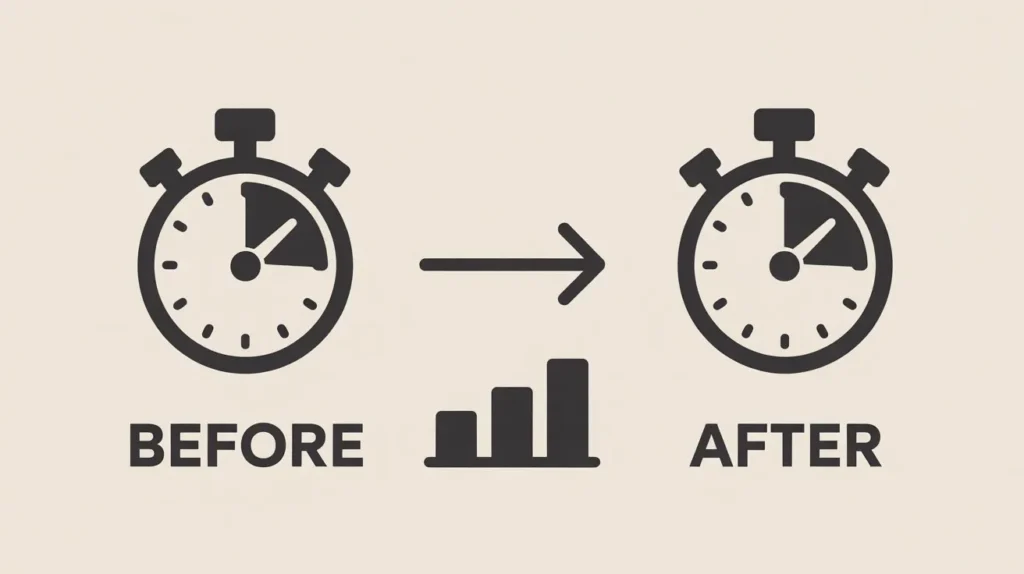
By 2026, many companies will stop collecting AI tools like they’re free samples. They’ll keep what proves it saves time, reduces errors, or improves customer experience.
McKinsey’s survey frames this as the difficult move from pilots to scaled impact — a move many organizations still haven’t completed.² The likely 2026 playbook looks like:
1. choose one repeatable workflow
2. add AI for a first draft or first sorting step
3. keep human review where it matters
4. measure results and cut what doesn’t help
That’s the most believable way these AI predictions become real life: less noise, more proof.
Citations
- Maslej, Nestor. “AI Index 2025: State of AI in 10 Charts.” Stanford HAI, 07 Apr. 2025.
- McKinsey & Company. “The State of AI in 2025: Agents, Innovation, and Transformation.” McKinsey Global Surveys, 05 Nov. 2025.
- European Parliament. “Artificial Intelligence Act: MEPs Adopt Landmark Law.” European Parliament News, 13 Mar. 2024.
- Chee, Foo Yun. “EU to Delay ‘High Risk’ AI Rules Until 2027 After Big Tech Pushback.” Reuters, 19 Nov. 2025.
- International Energy Agency. “Executive Summary.” Energy and AI, 10 Apr. 2025.